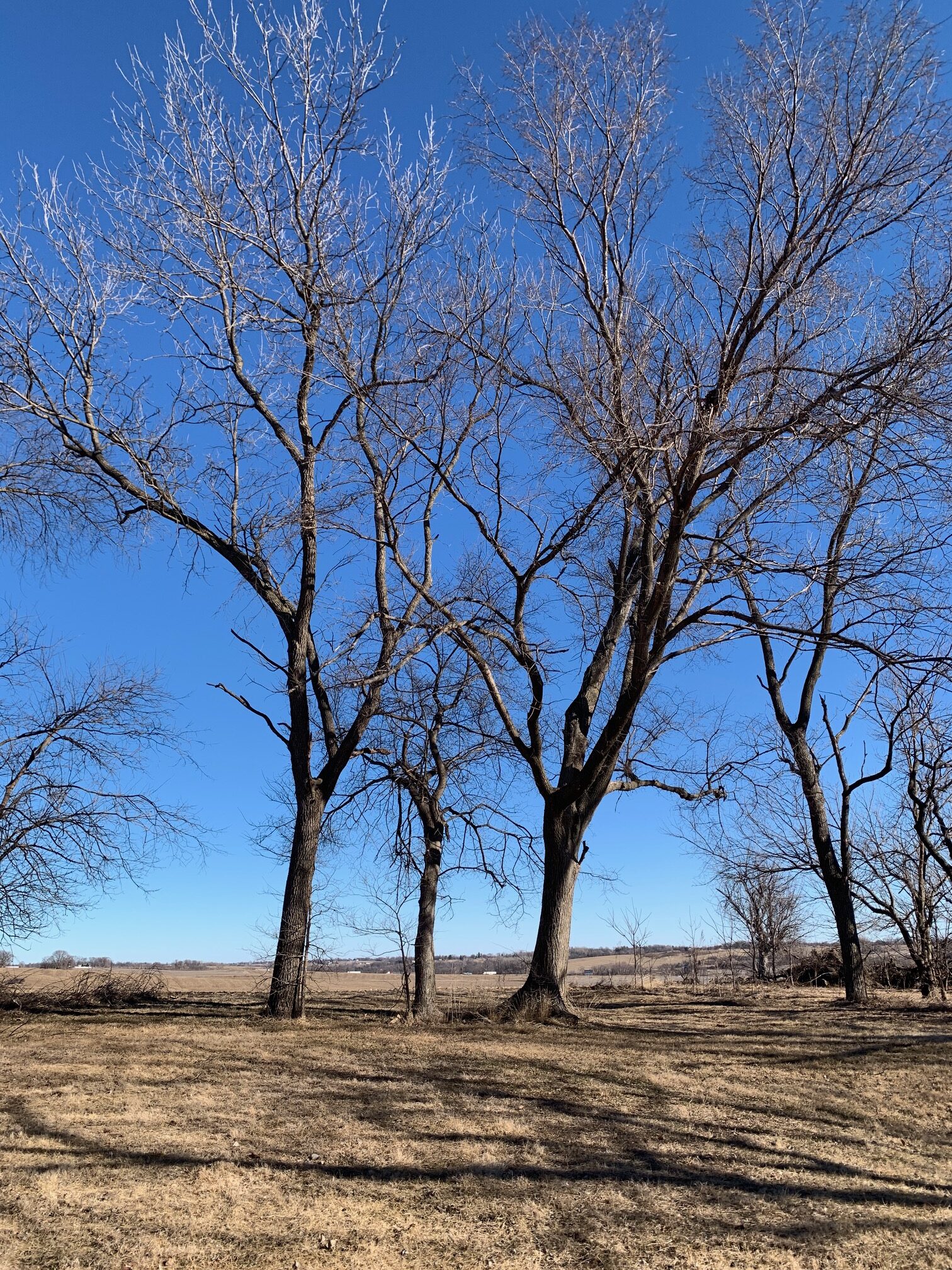
A small group of bare trees stands in the north fence row on a late winter day. The sky is brilliant blue; the rest of the world is drab. The tree on the right is an American Elm, one of less than ten remaining on Owl Acres. On the left is a Black Walnut, in the middle is a Black Cherry and the little weedy trees among the big ones are Hackberries.

Survivors: American Elm

Several American elms stand guard around the perimeter of Owl Acres. They’re part of the mixed-species windbreak that slows the northwest wind on cold winter days.  They’re not the huge old American elms that were once such a part of Americana. Those beautiful old trees were planted along suburban streets, arching over to hold hands […]

Continue reading Survivors: American Elm
Dense clusters of tiny white flowers with yellow centers (several hundred individual blossoms) adorn the end of a green leafy twig. Hundreds such twigs on this one shrub, make many thousands of flowers, each a potential fruit. Not all flowers will succeed to produce choke cherries, but for now they all provide an abundance of nectar and pollen for spring insects, especially clouds of tiny bees.

By Any Other Name: Chokecherry

A chokecherry by any other name would taste as bad. And it has many other names, including: bird cherry, chuckleyplum, sloe tree, bitterberry, jamcherry, chokeberry, cabinetcherry, rum chokecherry, whisky chokecherry and black or red chokecherry. It also borrows location names like eastern, western, Virginia, and California chokecherry. And then there’s the scientific name Prunus virginiana. […]

Continue reading By Any Other Name: Chokecherry
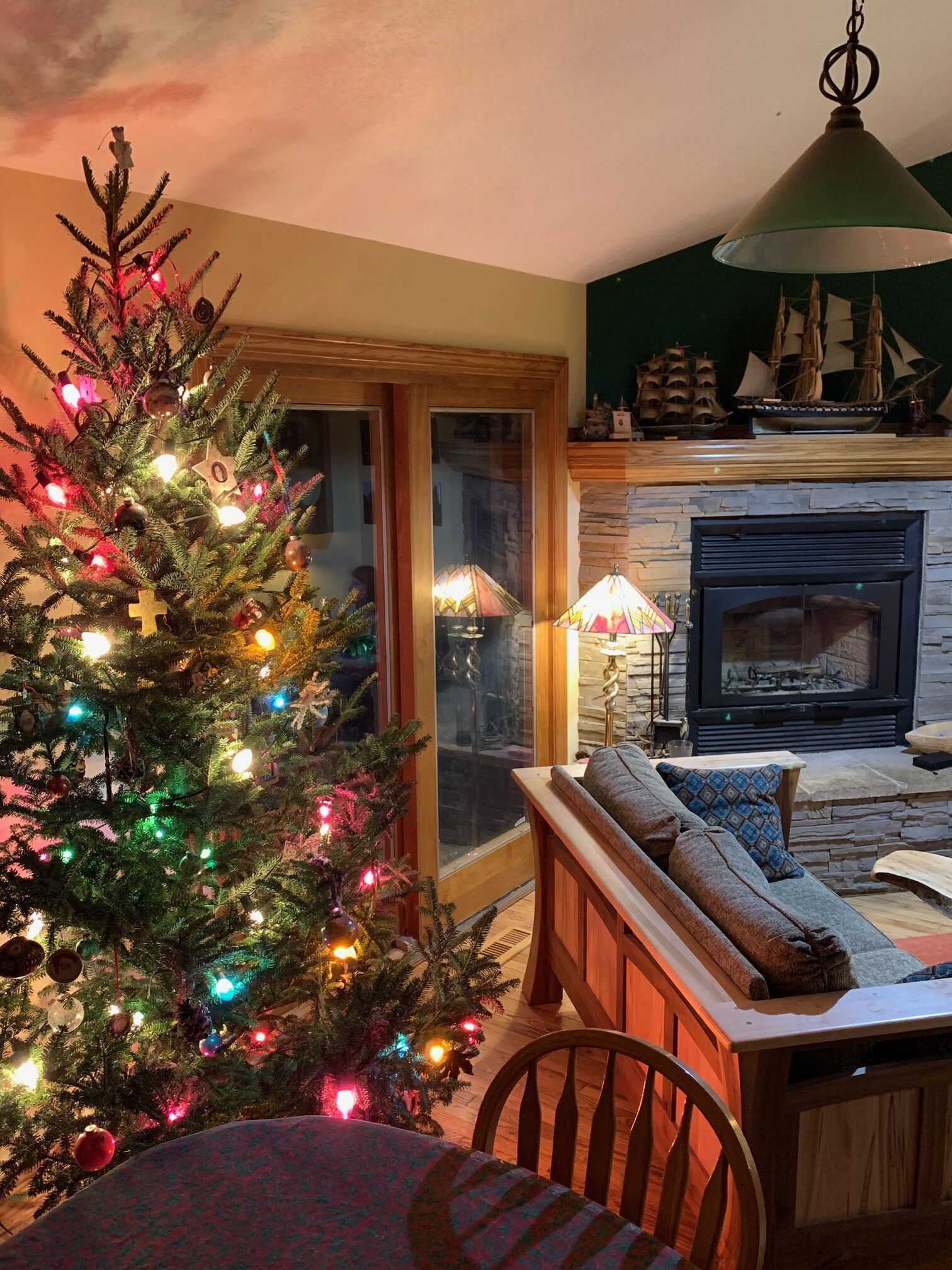
Fraser Fir that drew the honor (misfortune?) of being our Christmas Tree this year, in its place in the living room. Tall and cone-shaped, it’s hung with baubles accumulated over years. The antique, incandescent lights connect today into the flow of yesterdays and tomorrows.

Christmas Tree: Fraser Fir

Author’s note: I’m taking an unusual step to anchor today’s post in a moment. A reader has offered a comment, which I heartily endorse. Here it is: “Jimmy was probably the only kind and good hearted politician in history… Have a good 2025. It will likely be an interesting year.” One year when I was […]

Continue reading Christmas Tree: Fraser Fir
View looking toward the east fencerow in late October. The red maple in the foreground has dropped its leaves, forming a litter for the cleanup crew to start their work.

Falling Leaves

On a late October day, the wind has blown most of the leaves off the trees. They crunch underfoot, reminding me of childhood. The ancient elms near our school dormitory used to provide vast quantities of leaves to play in. We would jump and roll in them, relishing that autumn crunch. I’m sure the grounds […]

Continue reading Falling Leaves
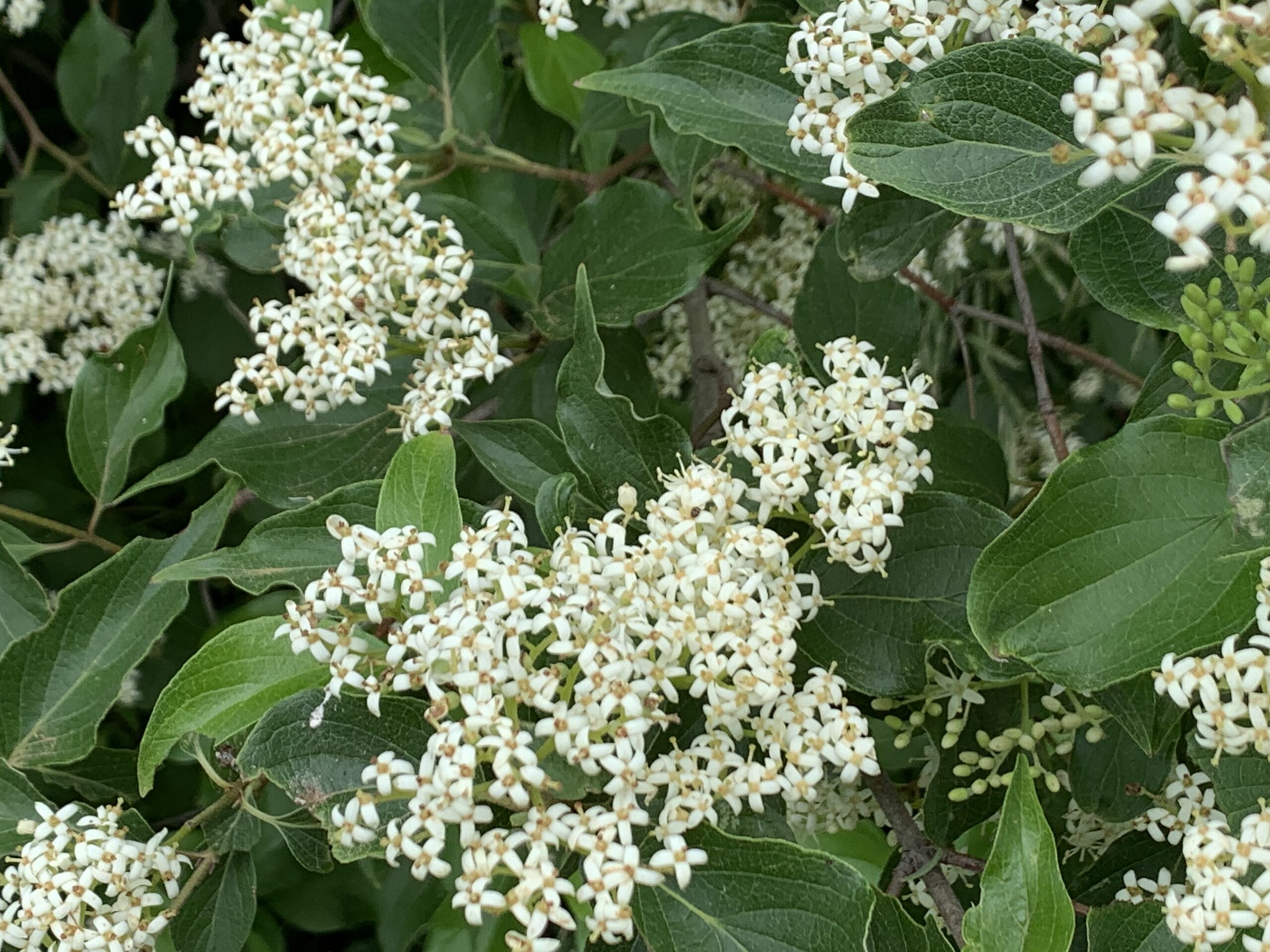
Dense clusters of tiny white flowers with yellow centers amid verdant, springtime foliage of Roughleaf Dogwood.

Native Host: Rough-Leaf Dogwood

Last fall we identified several types of berries along the edges of Owl Acres. One type of those berries was the white, pea-sized berries of the rough-leaf dogwoods which were growing in the yard and along the railroad tracks. I was familiar with some of the legends surrounding the dogwood, and was perhaps a bit […]

Continue reading Native Host: Rough-Leaf Dogwood
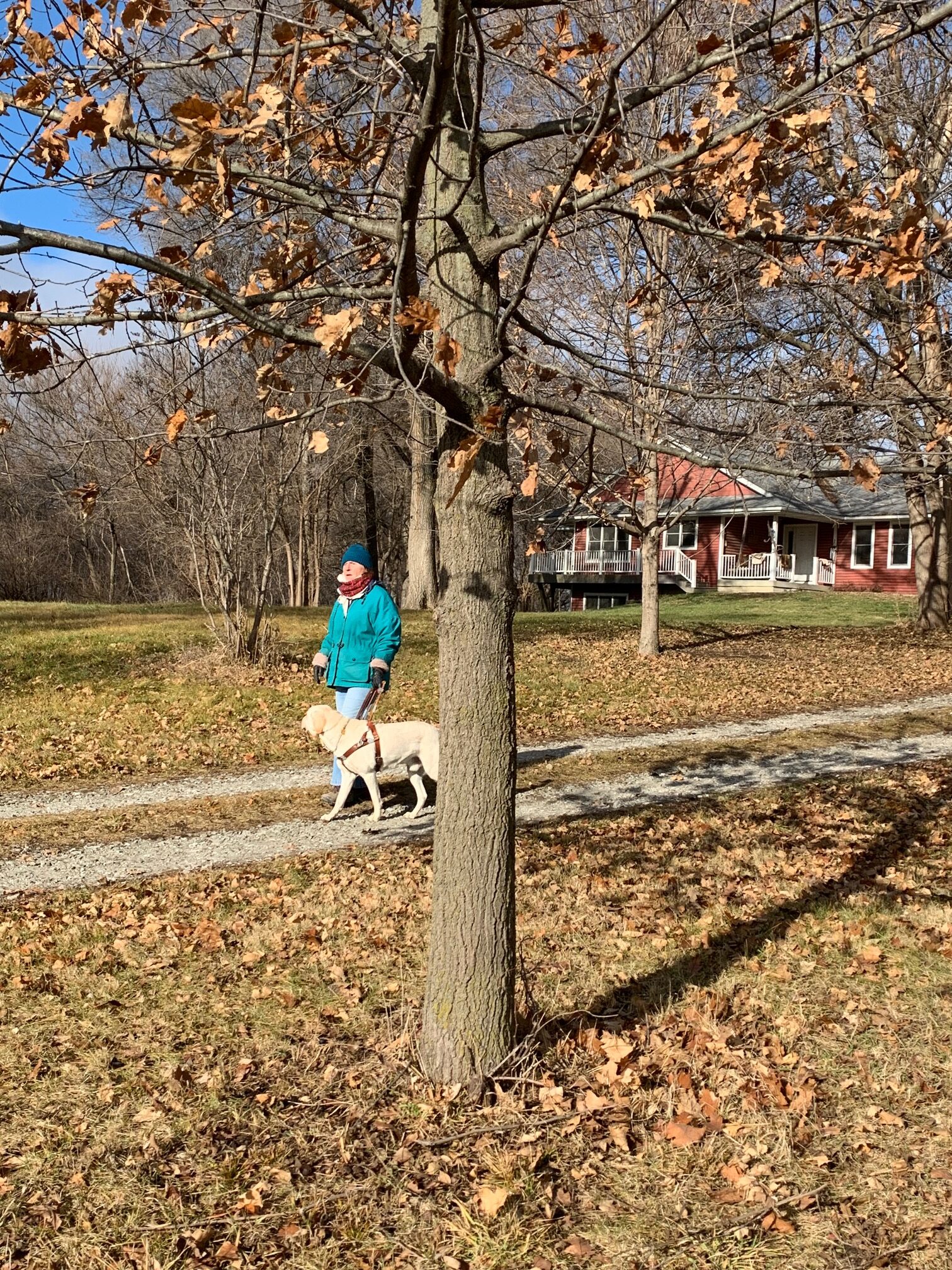
Small Red Oak stands in the front yard. Brown leaves still hang on the tree, even though it’s winter in Iowa. Karen and Dave walk down the driveway in the middle background, red house and blue sky in far background. Sunshine lights all on a cold day.

Red Oak

Most of the trees on Owl Acres are elms, walnuts, boxelders, hackberries and cedars. We only have one oak. It’s a red oak that we planted along the driveway about fifteen years ago. It was a sapling then, battling with the rabbits for survival. Those little creatures of the night wanted to eat its tender […]

Continue reading Red Oak
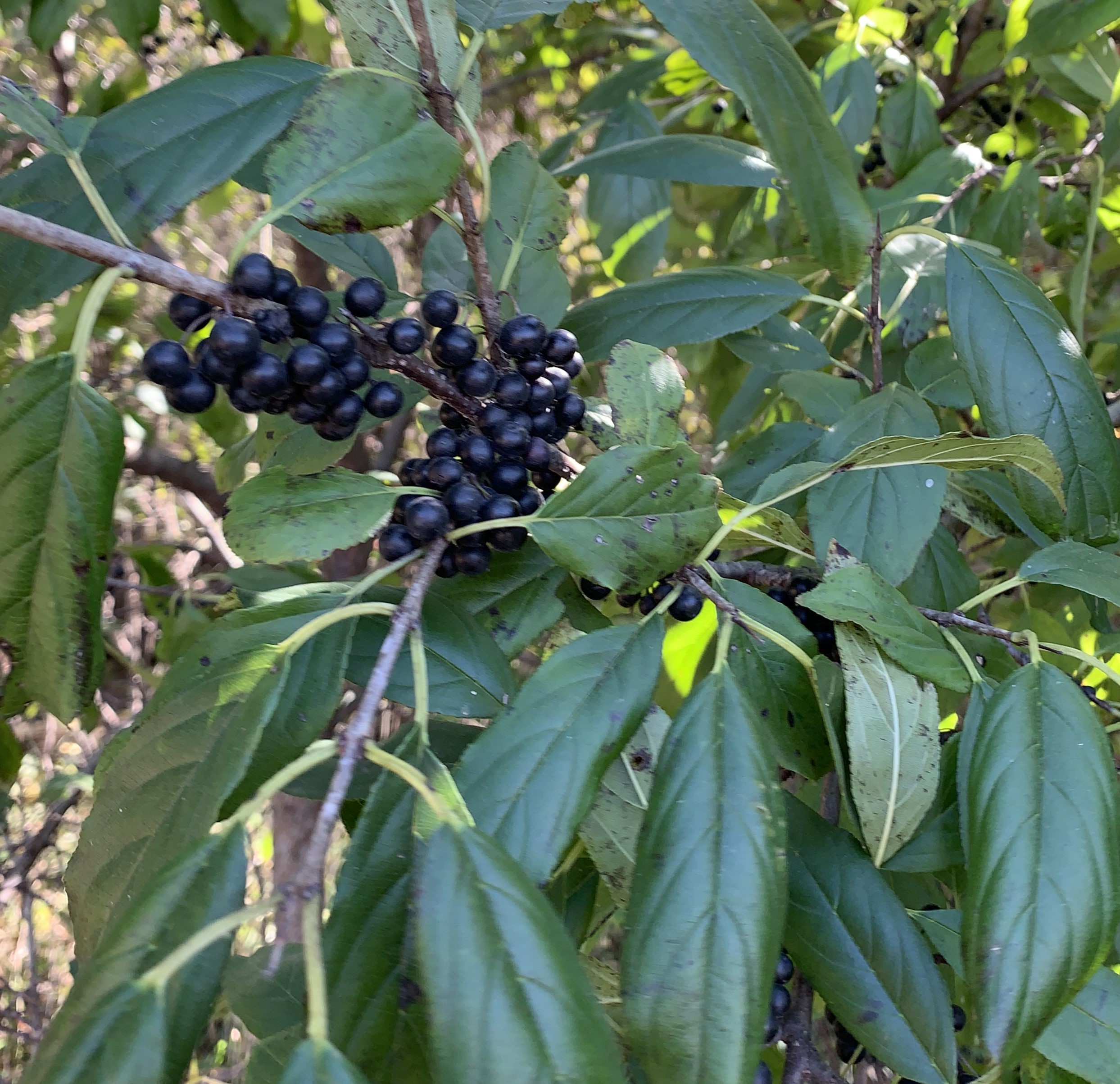
Dense cluster of black berries and long, shiny green leaves of Common Buckthorn thrive at the edge of the soybean field. The overwintering birds will eat, and the aphids will live to challenge next season’s beans.

Invasive Bully: Buckthorn

Winter food is abundant this fall, with the seeds from foxtails, ragweed, ditchweed, and all the other seeding plants. Berries are ripe, too. Juniper berries, elderberries, pokeberries and more hang in invitation to the birds. And in one spot by the railroad tracks, we found lots of red, white and black berries. The red ones […]

Continue reading Invasive Bully: Buckthorn
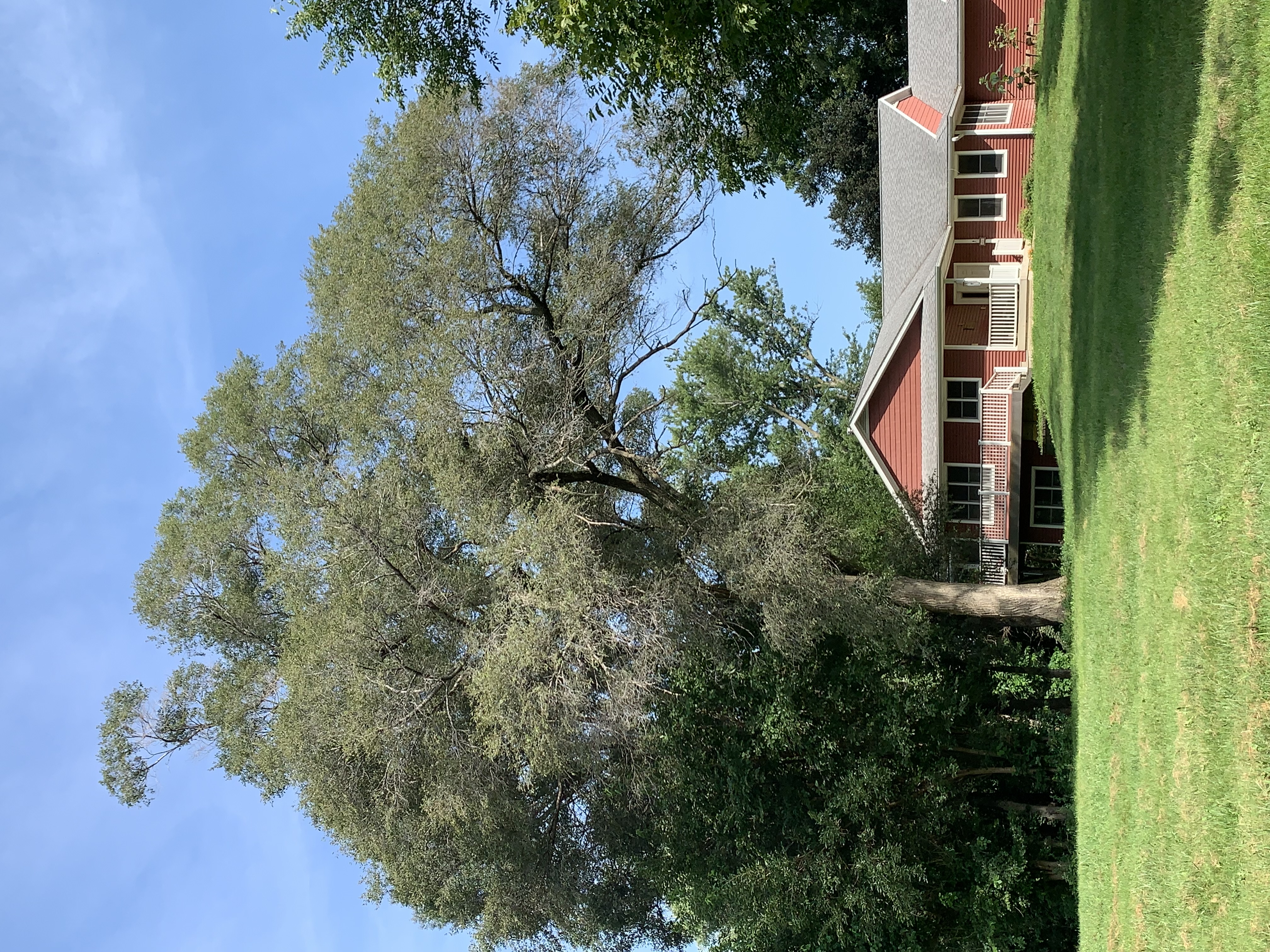
A large tree trunk goes away vertically and spreads into a green canopy high overhead.  A portion of the author’s barn red house is visible nearby.  Boxelder has stood on this old farmstead for more than 50 years.

River Maple or Boxelder Tree

Half of Owl Acres is given over to a forest reserve for tax purposes, but more importantly, woods for habitat purposes. The woods run along the west and north sides of the property and make a good windbreak as well. There are several types of trees in the woods, including quite a number of boxelders. […]

Continue reading River Maple or Boxelder Tree