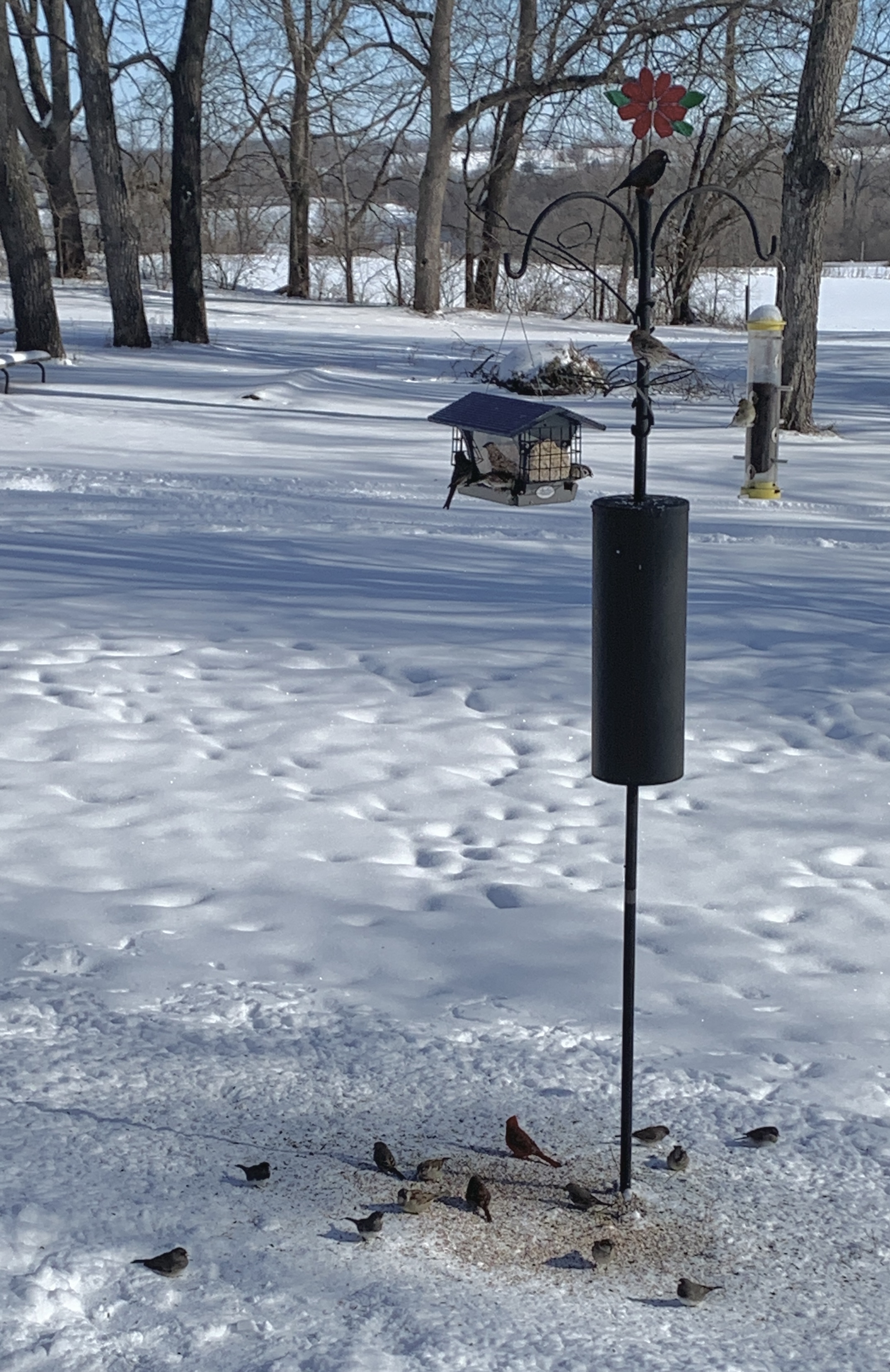
There’s snow on the ground and more coming, and the temps have dropped below zero. A mixed flock of birds comes and goes at the bird feeder as we watch through the study window. When blue jays or cardinals appear, the little birds all disappear. When the bigger birds have had their fill, the flock of little birds comes back to clean up what’s been kicked out onto the snow, or to peck at the suet blocks and the grain in the trays.
Blue jays and cardinals are easy to identify, but who are the little brownish guys? And why do they flock together when they’re not birds of a feather?
We have dark-eyed juncos, little gray birds that like to feed on the ground when the big birds are absent. They’ve migrated as far as owl Acres from their summer homes in the northern forests.
We have downy woodpeckers who prefer the suet blocks to supplement their diets of insects. And occasionally we see a hairy woodpecker, the downy’s much larger cousin. They live here all year, finding plenty to eat in the trees throughout the warmer months. Northern flickers and red-bellied woodpeckers sometimes come to sample the wares, and white-breasted nuthatches take their turns.
We have black-capped chickadees with their squeaky-gate songs and their bare little legs. They stay all winter in spite of the cold but need plenty to eat to stay warm. English sparrows join the group.
But what about the rest of these little brown birds? Are they new-world sparrows or finches? It’s hard to tell when they’re in their winter plumage. Here are five ways to tell them apart.
- Their legs. Finches have shorter legs than sparrows, and finch legs are dark gray to black while sparrow legs are longer and are a lighter pinkish color.
- Their bills. A finch’s bill tends to be shorter and pointed, while a sparrow’s bill is thicker and longer and often has a curve in it.
- Their tails. Finches tend to have shorter tails than sparrows, and they hold their tails down while perching. Sparrows have longer tails which they hold up and flash while perching.
- Color patterns. Finches in their winter clothes don’t go in for flashy patterning. Sparrows on the other hand show off their black, brown and white colors in intricate patterns on their backs and heads. Many wear caps as well.
- Foraging habits. Finshes fly from here to there, landing on dried seedheads, grasses and tree branches where they locate their food. Sparrows tend to forage on the ground.
These are generalizations, of course. 235 different species of finches in the family Fringillidae call North America home, including our house finch and gold finch. Some 30 species of sparrows in the family Passerellidae are also native to North America such as the white-throated sparrow and the song sparrow, but they help to differentiate the two families when we’re watching them at the bird feeder.
And why do these little birds flock together in the winter? A couple reasons are that there is safety in numbers, and there are more little bird eyes to watch for predators like the hawks and owls that live on Owl Acres. So this flock of some 25 little birds moves back and forth as a group from the bird feeder to the woods and back again. They all have to eat a lot to stay warm.
All of that leads to the need to keep the bird feeder filled.
Photo by Author. Alt text: The house-style birdseed feeder hangs from a shepherd’s hook on a cold day. The world is stark white after yesterday’s snow. A mixed flock of juncos, cardinals, finches, sparrows, chickadees and a few others forage on the ground while a few more kick out seeds from the tray above.