I think we’ve all heard the story of rabbits in Australia—how they were introduced on purpose because the Europeans who settled there thought it was a good thing to diversify the fauna in this new land. And then they discovered that rabbits were breeding like—well like rabbits—and eating all the grass. Somebody got the brilliant idea then to introduce weasels and stoats into the mix to hunt the rabbits. The whole thing was an ecological disaster, described as “an attempt to correct a blunder with a crime.
This is only one of many examples of introducing animals and plants into the New World where permanent, devastating changes occurred. People in the 19th century didn’t realize how beautifully balanced a native ecosystem is and how readily it can be disrupted and thrown off balance by the introduction of non-native species.
In 1854 in France, societies popped up around the world called Acclimatization Societies. Their stated goal was to introduce European plants and animals to newly colonized areas of the world. Rabbits, for instance made Australia feel more like home. The American versions of these societies soon followed the French and British. In 1861 the American Acclimatization Society formed in New York and began acting on their stated goals to introduce “such foreign varieties of the animal and vegetable kingdom as may be useful or interesting.”.
One of the most widely known results was the introduction and subsequent proliferation of house sparrows, AKA English sparrows in New York City. These aggressive birds chased out the native birds, causing near to total extinction in many populations.
Meanwhile, Acclimatization Societies became popular around the world and across the United States. In 1870, a group of German immigrants brought Eurasian tree sparrows, linnets and finches to St. Louis. They released a dozen pairs of each species into Lafayette Park in St. Louis, hoping they would acclimate. The linnets and finches didn’t survive, but the Eurasian tree sparrows did.
House sparrows had not yet made it to St. Louis, so the Eurasian tree sparrows had a couple of decades to get established. They competed with native birds for nesting cavities and raise two or three broods per year. They nest earlier than some native birds, claiming nesting cavities or boxes before the native chickadees and bluebirds have a chance.
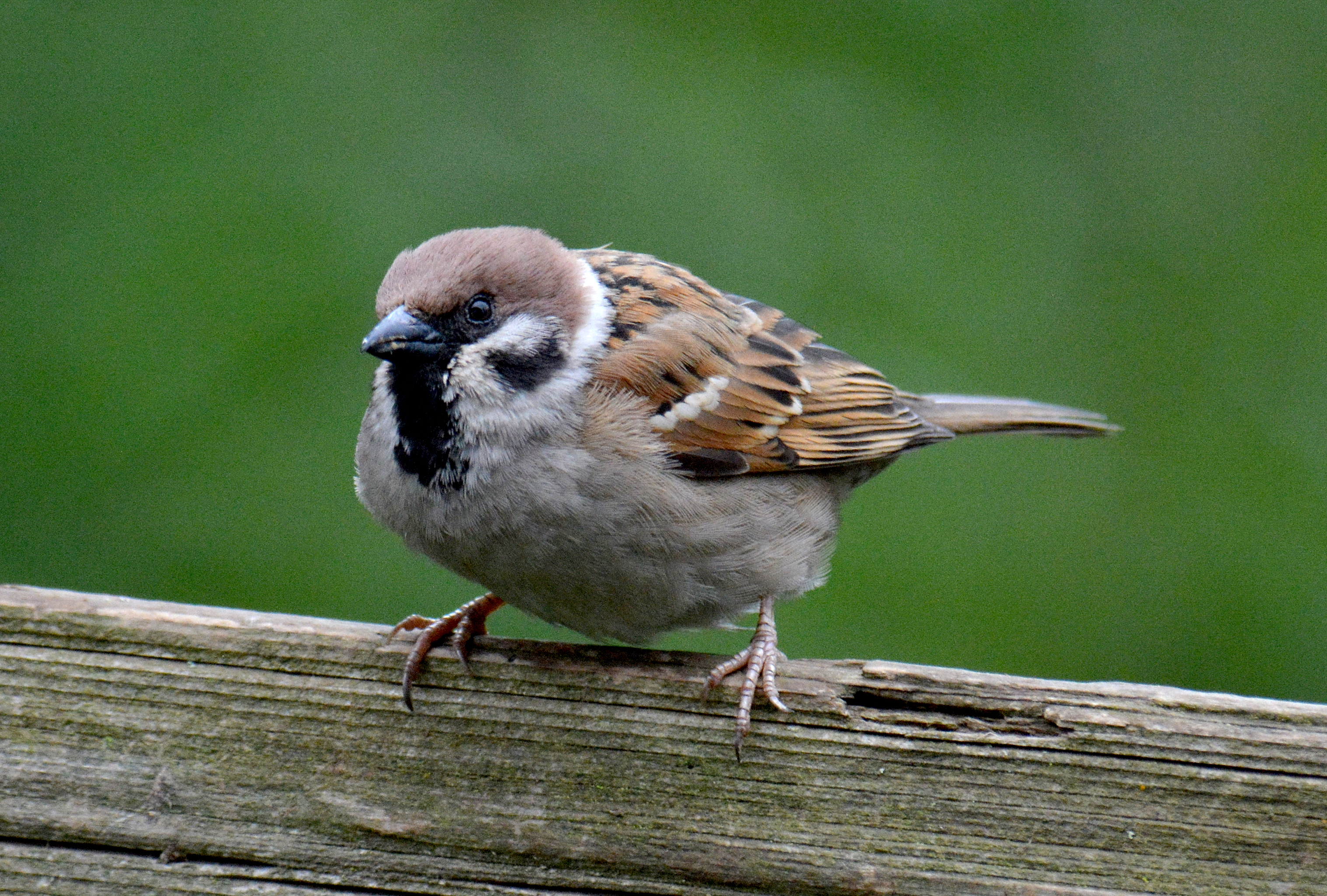
All winter we’ve been feeding the birds that remain on Owl Acres for the winter. We had a mixed flock at the bird feeder including a few sparrows. We thought they were the house sparrows. But wait—they’re not. They’re Eurasian tree sparrows (Passer montanus).
Eurasian tree sparrows are brown with a chocolate-brown head and grayish underparts. They have a bib like a house sparrow, but the bib is much smaller. Populations of these sparrows in Europe migrate, but the population in St. Louis and surrounds remains there all winter. For over a century, these little sparrows stayed mostly in the vicinity of St. Louis. Recently, however, they’ve been showing up farther afield, including at our bird feeder 250 miles away from their home ground.
The acclimatization Society continued into the 20th Century. In 1910 a Louisiana Representative seriously suggested bringing Nile hippopotamuses to America. He thought they could eat the invasive water hyacinths and then be slaughtered for meat. Fortunately, that never happened. Incidentally, hippos don’t eat water hyacinth. Ferral hogs, however, were introduced for hunting as late as the 1940s, and continue to be a problem in the south.
The Eurasian tree sparrow has been a relatively benign invader compared to its much more aggressive compatriots the house sparrow or the European starling although the bluebirds may not agree.
Photo from Wikimedia.org by Dr. Raju Kasambe Alt text: Mottled grey, white, brown and black songbird crouches menacingly on a weathered board. Eurasian Tree Sparow sports a black bib similar to (and easily confused with) its cousin English Sparrow. We can’t tell the difference, but Merlin Bird ID to the rescue.