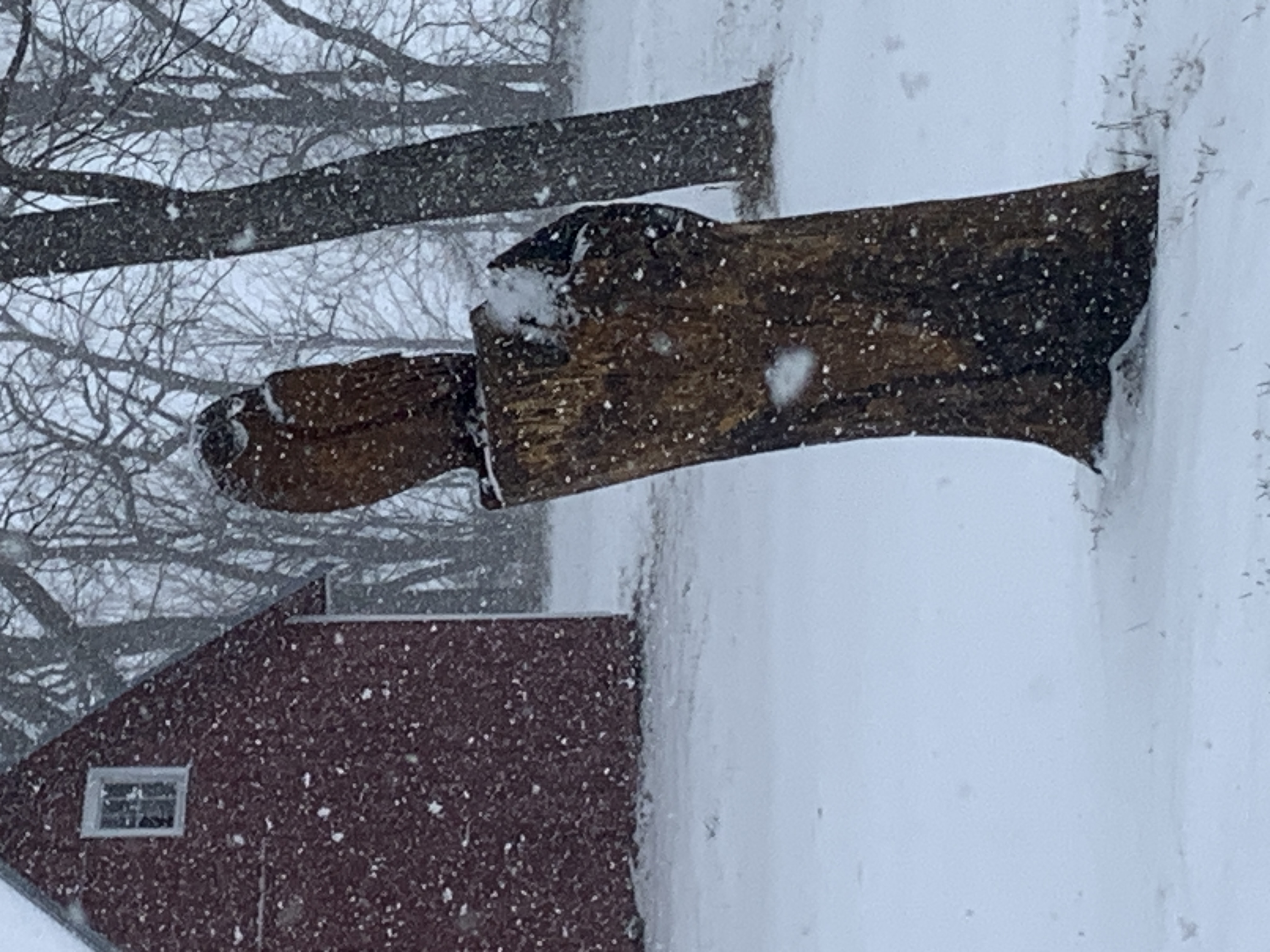
Winter is setting in. The forecasters are suggesting highs of 3 degrees above zero. In the prairie garden, the stalks of flowers and grasses are dry and brittle. Seeds cling on to feed the birds and the mice and voles.
The hard frost has killed off the mosquitoes, for which we are grateful. But what about the bees that pollinate Owl Acres on a summer day? Where do they go? Do they all die off? Or do they have ways to survive the winter? The answer is that different species of bees have different strategies.
We’re all fond of our honey bees—at least of their honey if not themselves. Honey bees have a particular strategy for staying warm and cozy when the temperatures outside the hive drop below zero. First, they seal the hive with a kind of glue they manufacture. Then hey surround the queen and begin to shiver, vibrating their flight muscles. This activity generates heat, and with a properly sealed hive, the bees can maintain a constant temperature of 75 degrees F. This keeps the queen warm, but it takes a lot of energy. So during the summer and fall, the workers lay in a store of nectar and make from 40 to 60 pounds of honey. They will eat the honey through the winter to fuel their shivering. The queen will most likely survive the winter in this way and will go on laying eggs and populating the hive until she is displaced by a younger contestant.
Bumblebees take a different approach. In the spring, a queen bumblebee emerges from her winter hideout, searches for a good place to build a nest, and sets to laying eggs. She keeps them warm, and scurries around to find early spring flowers to bring nectar and pollen home for her growing brood. Throughout the spring and summer, the nest gets bigger as more and more eggs are hatched and become worker bees. In the fall the drone comes out to mate with the young new queens. The old queen and all of her retinue will die off as the winter comes, and only the new young queen will survive the winter. During the summer and fall, the new young queen eats and eats, laying in fat for the winter hibernation. After she mates, she will search for a place with enough shelter to suit her. It’s often in a hollowed-out bit of log or under a dense mat of vegetation. She will dig a little way into the dirt and call it home. Here, when the weather changes, her hormones tell her it’s time to hibernate. As a true hibernater, she will lower her body temperature and her metabolism and go dormant for the cold months. If it gets too cold, proteins in her cells act like antifreeze, keeping her from freezing solid and damaging her cells.
When the weather warms up enough in May or June, she wakes up, vibrating her flight muscles to warm up. She starts the cycle over with a new nest and a new brood of worker bees to support her.
A third strategy focuses on the continuation of the species rather than the individual. The vast majority of bee species are solitary. They don’t live in hives or communal nests, and they care for their offspring by providing a safe warm place to pass the winter. To do this, the queen identifies a crevice or a hole to make her nest. She begins collecting pollen and takes it to her nest where she makes it into little balls called bee bread. Each ball of bee bread contains enough nutrients to sustain one member of the next generation until it’s ready to find its own pollen and nectar. When the queen is mated and ready, she lays one egg on each ball of bee bread. When the egg hatches, the larva’s food will be right there. And meanwhile neither the drone father nor the queen mother expect to survive the winter.
Photo by Author. Alt text: The Barred Owl Tree Sculpture stands among bare black walnut trees and near the old shed on Owl Acres. The first snowfall of the new winter season fills the air and covers the ground.