I have a glass of tonic water to slake my thirst on a hot and muggy summer day. It has that bitterness that I like. The bitterness comes from its signature ingredient—quinine.
Quinine, historically, was used by the indigenous tribes of Ecuador and Peru as an antimalarial long before the Spanish and the Jesuits invaded their world. The natives apparently shared their knowledge with the Jesuits who came with the Spanish invaders in the 16th and 17th centuries. In 1631 the Countess of Cinchona, the wife of the Spanish Viceroy fell ill with malaria. The Jesuits treated her with the ground-up bark of a certain tree found in the rainforests of the Andes. She recovered quickly, to everyone’s surprise. They named the tree cinchona after her and spread the news of this fantastic cure far and wide.
Quinine is an alkaloid in the cinchona tree’s bark. It is very bitter, and it kills the parasites that cause malaria.
During World War I, the supply of quinine to treat soldiers was interrupted by the war. The Army turned to another remedy for fever and chills called feverfew, also known as wild quinine (Parthenium integrifolium). Wild quinine has a different set of alkaloids than the cinchona tree’s bark, but they were used by native Americans for similar problems. Early settlers gave it the name of feverfew because it was thought to reduce fevers.
The root of the wild quinine is very bitter. Indigenous people in North America used it for a variety of medical purposes, including as an antimalarial. They also used the leaves as poultices on burns and to doctor sores on their horses. The roots were made into a tea to combat dysentery.
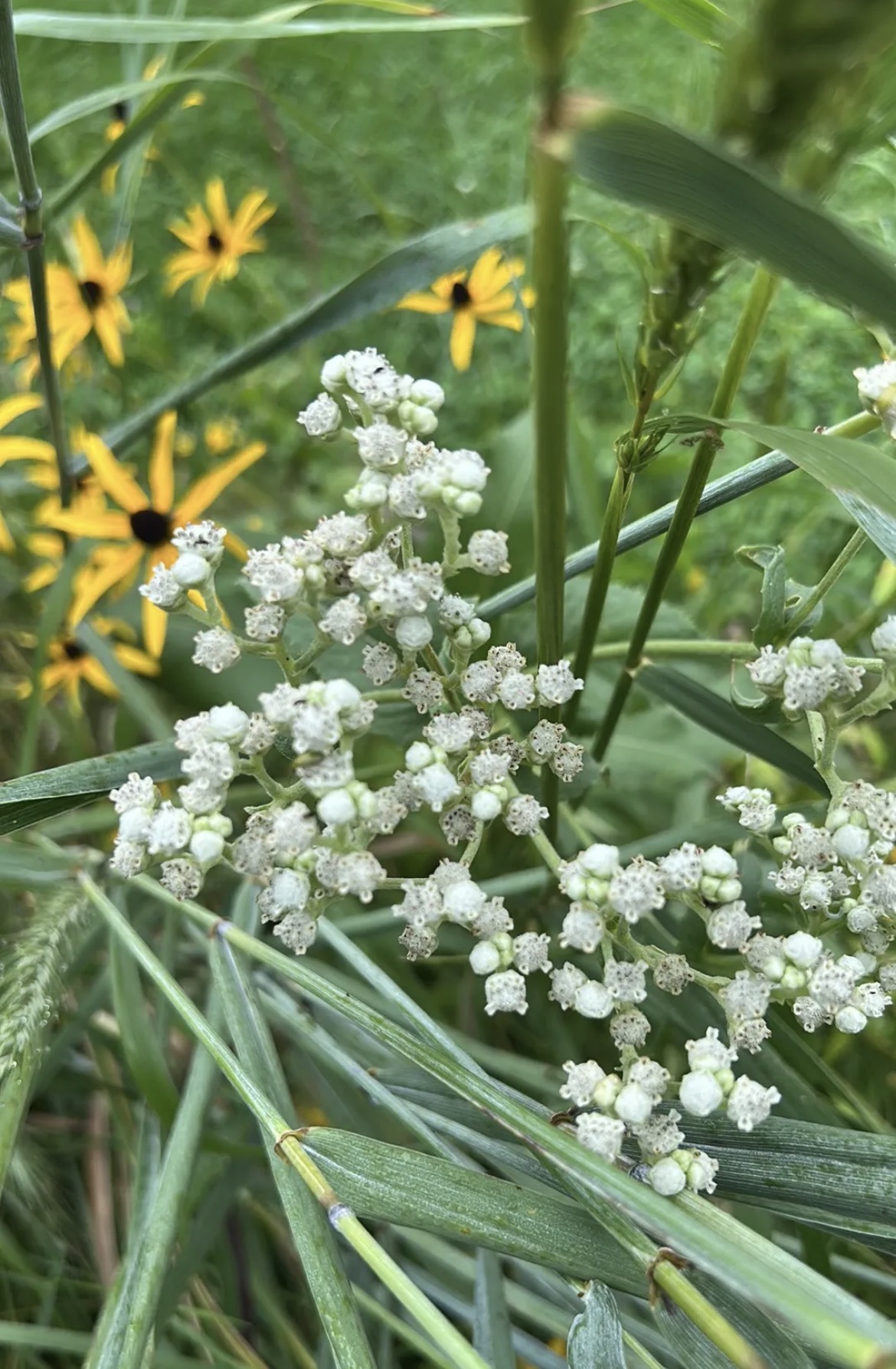
Wild quinine is one of the less showy flowers in the prairie garden. It stands 3 to 4 feet high on stiff, somewhat hairy stems. From spring into fall, it produces long-lasting, dense clusters of little white flowers. The flowers attract a host of native bees, including sweat bees, mining bees, small carpenter bees, and yellow-faced bees. Native flies like soldier flies, and syrphid flies drink its nectar and carry its pollen from flower to flower. The larvae also patrol for aphids and other pests. Butterflies and moths visit the tiny, pearl-like flowerheads as well.
Insects in general are very fond of wild quinine, but mammals don’t agree. The bitter taste of its leaves and stems discourages deer from eating it. The quinine in my tonic may have the same effect on humans.
I like my tonic straight—no gin or vodka. It has plenty of sugar in it along with the citric acid and quinine. Happily, there’s no malaria here, just hot, muggy summer days.
Photo by Author. Alt text: Pea-size, snow-white, pearl-shaped flowers bloom in profusion atop wild quinine in the Owl Acres Prairie Garden.